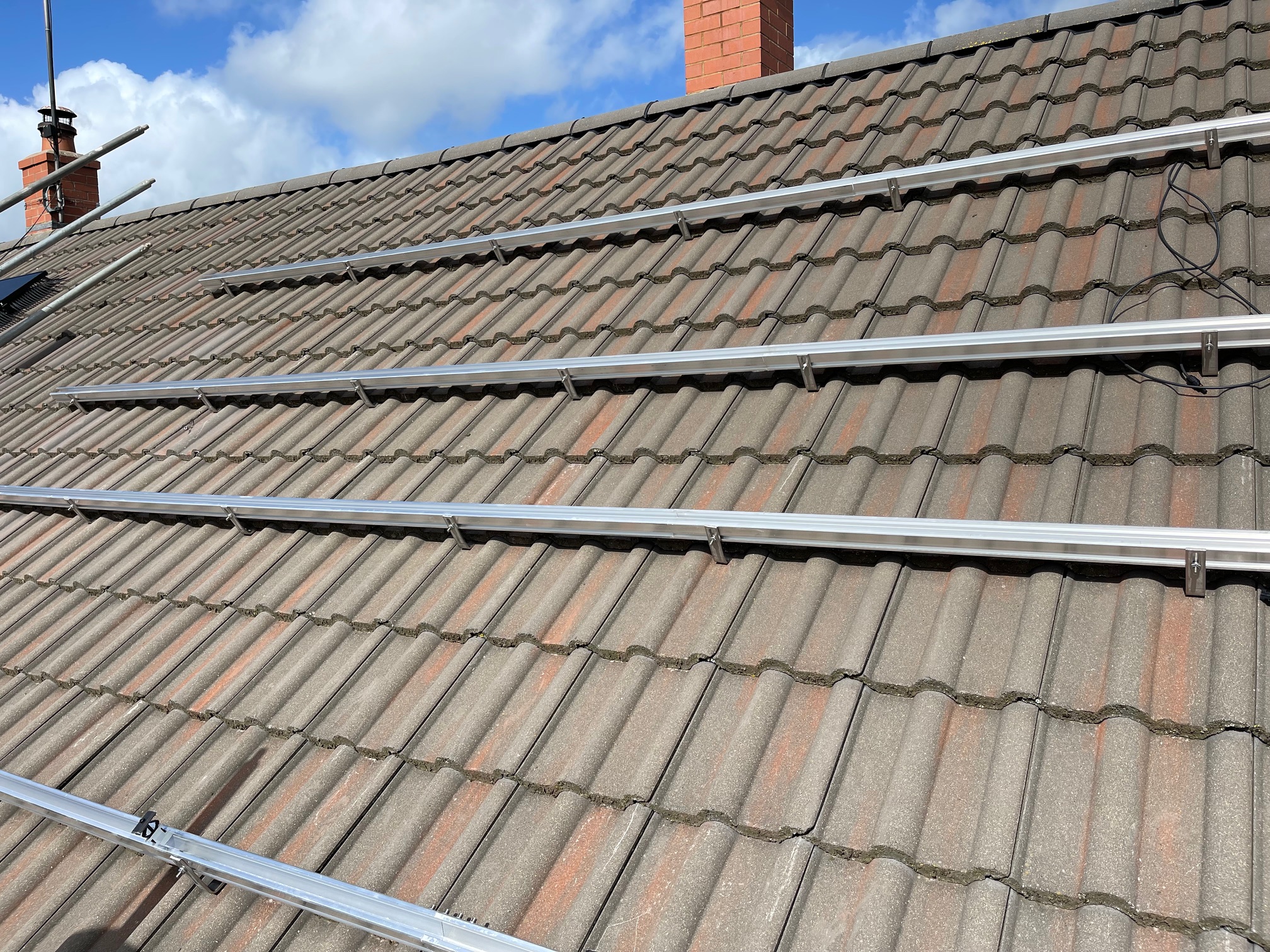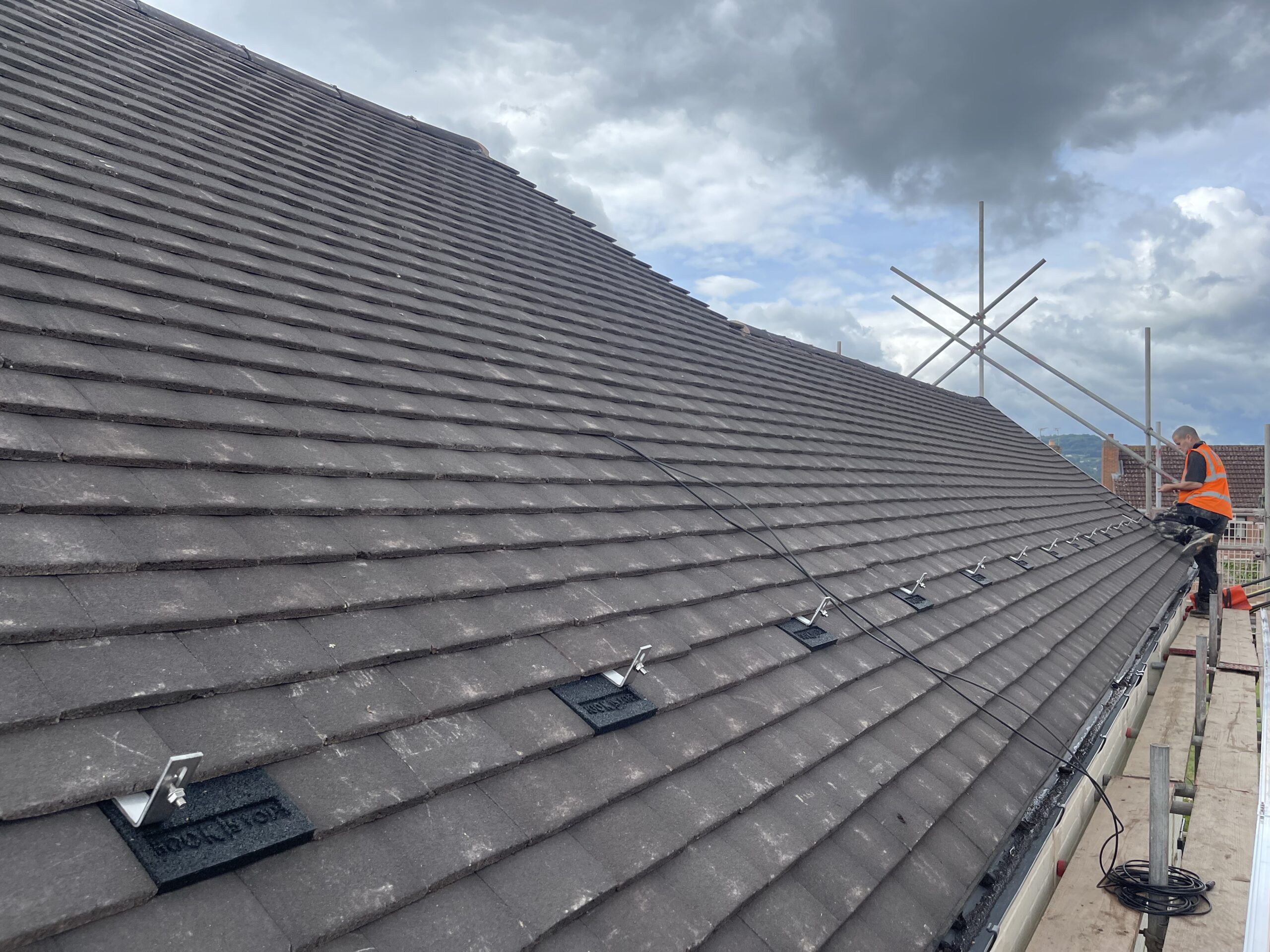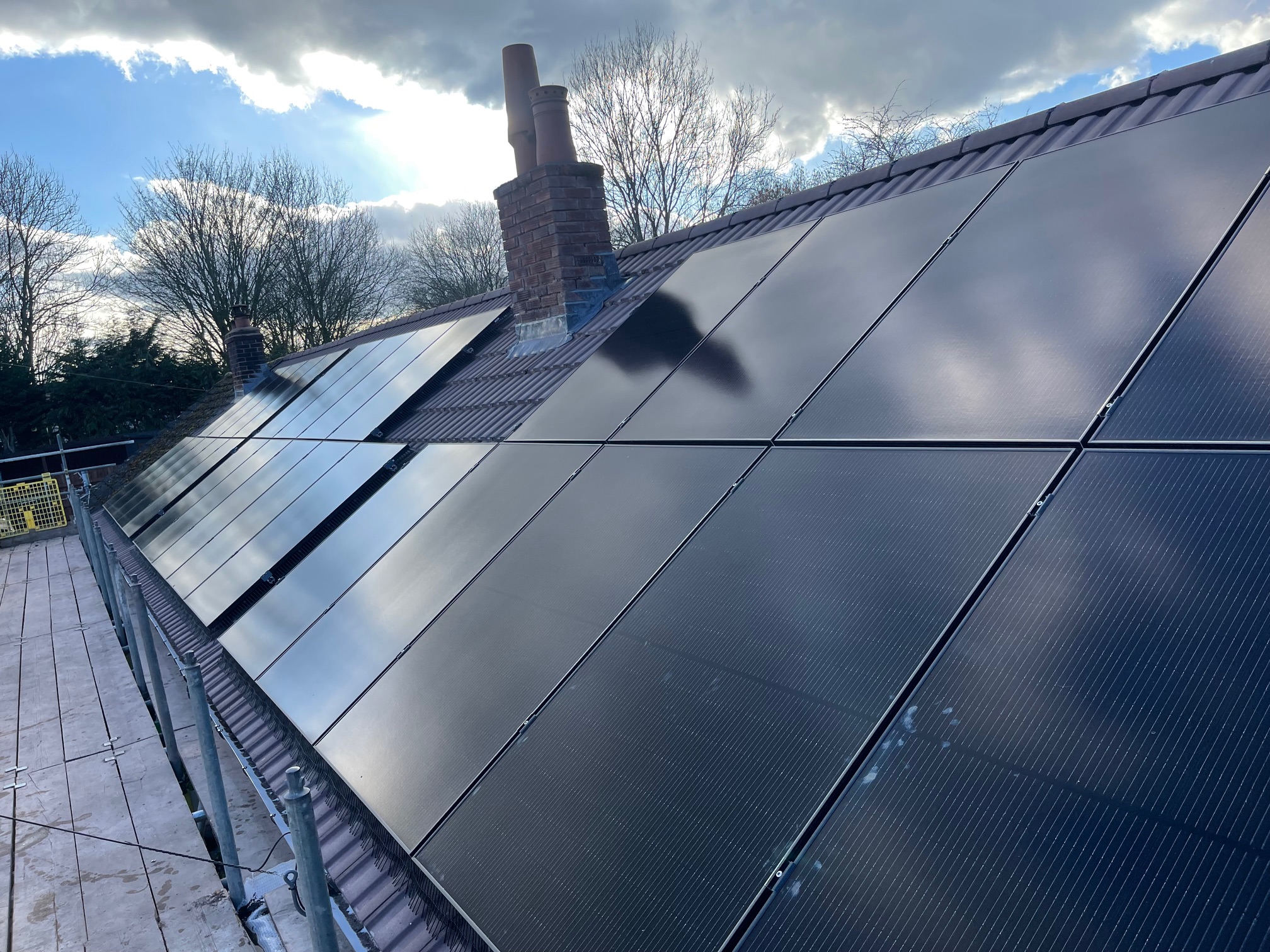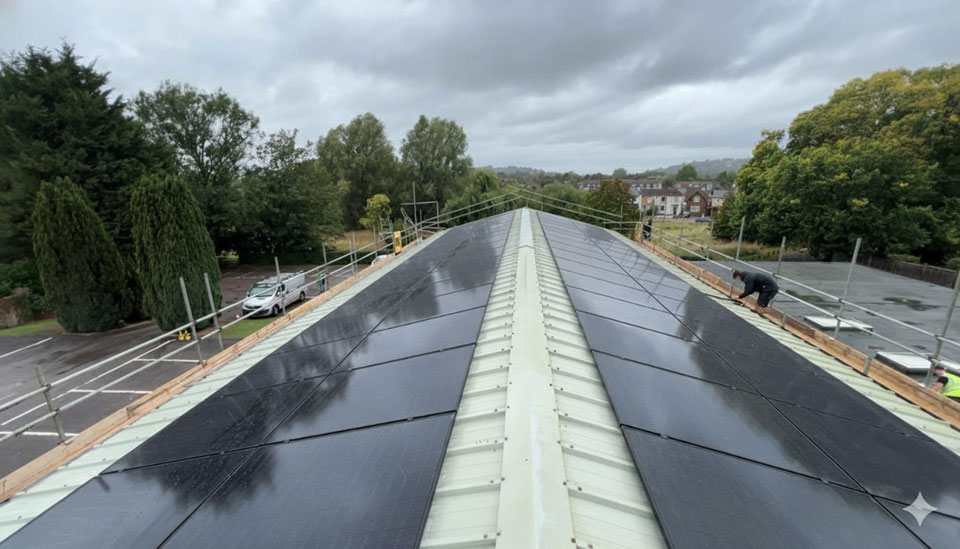
Solar Energy
Over the past decade, we’ve seen significant advancements in technology and solar battery storage – and we’ve gained valuable insights from firsthand experience.
Drawing on our expertise, we select only premium, hand-picked products known for their proven performance and long-term reliability. Each product we install is best-in-class and backed by extended warranties for your peace of mind.
All installations are carried out by our fully trained, qualified, and experienced in-house solar installation teams, ensuring quality workmanship from start to finish.
With over 10 years of experience, Nulook complete a large number of domestic solar installations every year and can advise you on how to make the most of your investment in solar panels. With teams well placed to cover all areas around the south of England , we can install solar energy systems for homes over a wide area.
Most domestic solar installations are completed in under a day with minimal disruption to your home. Once your domestic solar PV system is up and running, one of our technicians will walk you through the system to explain how everything works. You will receive a full Operations & Maintenance manual with all your certification and paperwork and we can support you with your application for the SEG (Smart Export Guarantee).

Why Have Solar ?
Save Money on Electricity Bills
Once installed, solar panels can significantly reduce or even eliminate your electricity bills.
In many areas, you can sell excess power back to the grid (called net metering), which further offsets costs.
Reduce Your Carbon Footprint
Solar energy is clean and renewable.
Using solar reduces dependence on fossil fuels and cuts greenhouse gas emissions, which helps combat climate change.
Energy Independence
Solar panels reduce your reliance on utility companies.
In areas with frequent outages, pairing panels with batteries (like the Tesla Powerwall) can keep your home running.
Incentives & Rebates
Many governments offer tax credits, rebates, and other financial incentives for installing solar systems.
Increase Home Value
Homes with solar panels often sell faster and at a premium.
Buyers are attracted to lower utility bills and sustainable features.
Low Maintenance
Solar panels have no moving parts, which means fewer mechanical issues.
With occasional cleaning and routine inspections, they can last 25–30+ years.
Why Chose Nulook
With over 10 years of experience, Nulook complete a large number of domestic solar installations every year and can advise you on how to make the most of your investment in solar panels. With teams well placed to cover all areas around the south of England , we can install solar energy systems for homes over a wide area.
Most domestic solar installations are completed in under a day with minimal disruption to your home. Once your domestic solar PV system is up and running, one of our technicians will walk you through the system to explain how everything works. You will receive a full Operations & Maintenance manual with all your certification and paperwork and we can support you with your application for the SEG (Smart Export Guarantee).
Example Breakdown (4 kW System)
| Installation cost | £5,000–£7,000 |
| Annual savings | £700–£1600 |
| SEG income | £50–£150/year |
| Payback period | 6–10 years |
| System lifespan | 25+ years |
| Net lifetime savings | £8,000–£40,000+ |
Solar Battery Storage FAQs
Do solar panels produce energy without sunshine?
Solar panels do not produce significant energy without sunshine, but here’s a breakdown of what happens under different light conditions:
Direct Sunlight (Full Sun)
- Maximum energy production.
- This is the optimal condition for solar panels.
Cloudy or Overcast Conditions
- Reduced energy production, typically 10% to 25% of their normal output.
- Solar panels can still generate power because diffused sunlight (scattered by clouds) still reaches them.
Night time or Complete Darkness
- No energy production.
- Solar panels require photons (light particles) to generate electricity, and these aren’t present at night.
Artificial Light (e.g., street lamps, indoor lights)
Panels might generate a tiny amount of power under very strong artificial light, but:
- It’s extremely inefficient.
- Not practical for real energy production.
How does a solar panel work?
Solar panels work by converting sunlight into electricity using a technology called the photovoltaic (PV) effect. Here’s a breakdown of how it works, step by step:
1 Sunlight Hits the Solar Panels
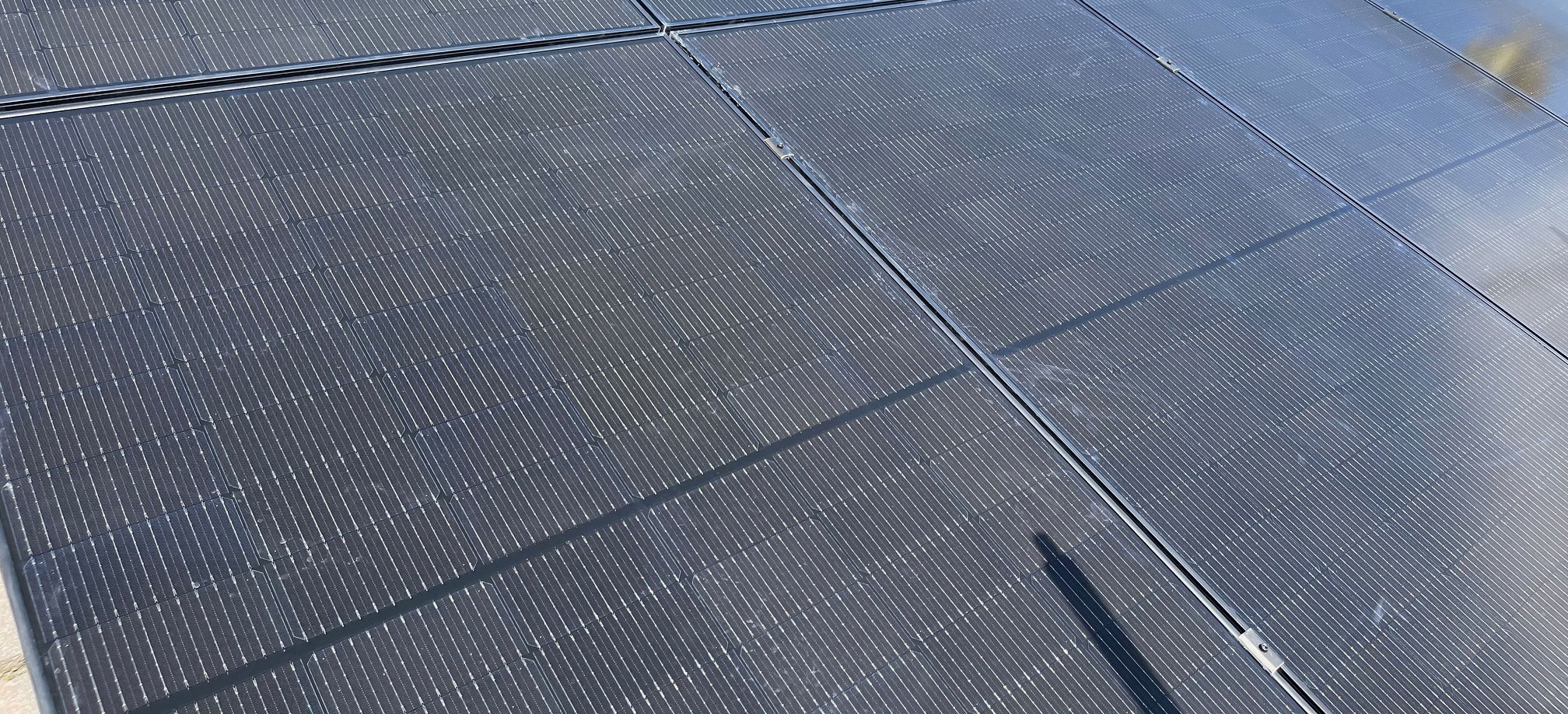
- Solar panels are made up of many solar cells, usually made from silicon, a semiconductor material.
- When sunlight (photons) hits these cells, it energizes the atoms in the silicon.
2. The Photovoltaic Effect
- The energy from the sunlight knocks electrons loose from atoms in the silicon.
- This creates free electrons that start moving, generating an electric current.
- The structure of the solar cell forces electrons to move in a certain direction, creating direct current (DC) electricity.
3. Inverter Converts DC to AC
- Most homes and businesses use alternating current (AC) electricity.
- The DC electricity from the solar panels is sent to an inverter, which converts it to AC electricity.
4. Powering Your Home or Business
The AC electricity can then be:
- Used immediately to power your home.
- Stored in a battery for later use (in solar-plus-storage systems).
- Sent back to the power grid (in grid-tied systems), possibly earning you energy credits (net metering).
5. Monitoring and Maintenance
- Many solar panel systems include monitoring software to track energy production.
- Panels are low-maintenance, but may need occasional cleaning or inspection.
How many solar panels will I need?
To help you figure out how many solar panels you need, I need a bit more information. Here are the key questions:
1. Your Monthly or Daily Electricity Usage
- n kWh (kilowatt-hours).
- You can find this on your electricity bill.
Example: “I use 900 kWh per month.”
2. Your Location or Sunlight Hours
- City or region (for solar panel sunlight potential).
- Or tell me your average peak sun hours per day (if you know them).
Example: “I live in Texas and get 5.5 peak sun hours/day.”
3. Panel Size
What size (wattage) of panel are you considering?
Common sizes: 350W, 400W, 450W, etc.
Example Calculation
If you just want a quick estimate:
Rule of thumb:
For every 1 kW of solar panel capacity, you’ll generate about 4–5 kWh/day in a sunny location.
So:
If you use 900 kWh/month = 30 kWh/day
And each panel is 400W (0.4 kW), producing ~1.6 kWh/day (0.4 × 4)
Then you’d need: 30 ÷ 1.6 = ~19 panels
What do inverters do?
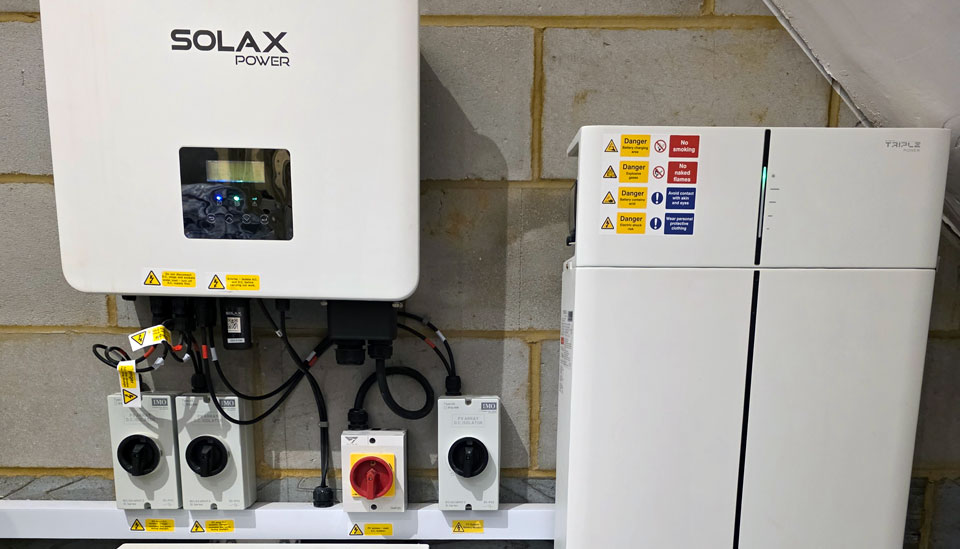
Inverters are one of the most important parts of a solar power system. Here’s a simple breakdown of what inverters do:
Converts DC to AC
- Solar panels produce DC (direct current) electricity.
- Your home uses AC (alternating current) electricity.
- An inverter converts the DC from your solar panels into AC so your appliances can use it.
Why Is This Important?
Without Inverter
Solar energy is unusable in your home.
Can’t send power to the grid.
With Inverter
Solar energy powers your lights, appliances, etc.
Can sell excess power to the grid (net metering).
Other Functions (Modern Inverters)
Monitoring:
- Tracks your energy production (via app or display).
Safety Shutoff:
- Turns off during a power outage for safety (unless you have a battery + hybrid inverter).
Battery Integration:
- Some inverters work with batteries to store extra energy.
Types of Inverters
| Type | Description | Best For |
| String Inverter | One central inverter for all panels | Simple setups, cheaper |
| Microinverter | One small inverter per panel | Shaded roofs, more efficient |
| Hybrid Inverter | Works with solar + batteries | Battery backup systems |
What Is Battery Storage?
Battery storage means storing extra solar energy produced during the day to use later – like at night, during blackouts, or when electricity prices are high.
Key Battery Terms (Quickly Explained)
| Term | What It Means | Example |
| Capacity (kWh) | Total amount of energy it can store | A 10 kWh battery stores 10 kilowatt-hours of electricity |
| Usable Capacity | Energy you can actually use (some reserve is kept to protect battery life) | 90% of 10 kWh = 9 kWh usable |
| Power (kW) | How much energy it can deliver at once | 5 kW = can run a 5,000W load (like fridge + lights + AC) |
| Cycle Life | How many charge/discharge cycles it can handle | 6,000 cycles = ~15–20 years |
| Depth of Discharge (DoD) | How much battery can be drained | 90% DoD = you can use 90% of total capacity |
Common Battery Sizes
| Battery | Usable Capacity | Power Output |
| Tesla Powerwall 2 | 13.5 kWh | 5 kW (7 kW peak) |
| LG Chem RESU 10H | 9.3 kWh | 5 kW (7 kW peak) |
| Enphase IQ Battery 10 | 10.08 kWh | 3.84 kW |
| Sonnen Eco 10 | 10 kWh | 3–8 kW |
You can stack batteries if you need more storage.
How Much Battery Storage Do You Need?
For Backup Power (Emergencies)
Think of what you want to run during an outage:
| Appliance | Energy Use (kWh/day) |
| Fridge | 1.5 kWh |
| Wi-Fi + Lights | 0.5–1 kWh |
| TV + Devices | 1–2 kWh |
| AC or Heat Pump | 3–7 kWh |
| Total | ~5–10 kWh/day |
So, a single 10–15 kWh battery can power basic essentials for a day.
For Daily Use (Time-of-Use savings)
If you’re storing solar to use at night:
- Check your evening + night usage.
- Example: You use 20 kWh/day, but only 10 kWh at night → 10 kWh battery is enough.
For Full Off-Grid
- You’ll need 2–3 days of backup, depending on weather.
- Example: 20 kWh/day × 3 = 60 kWh total storage.
- That’s 4–5 large batteries.
Do you supply the scaffolding?
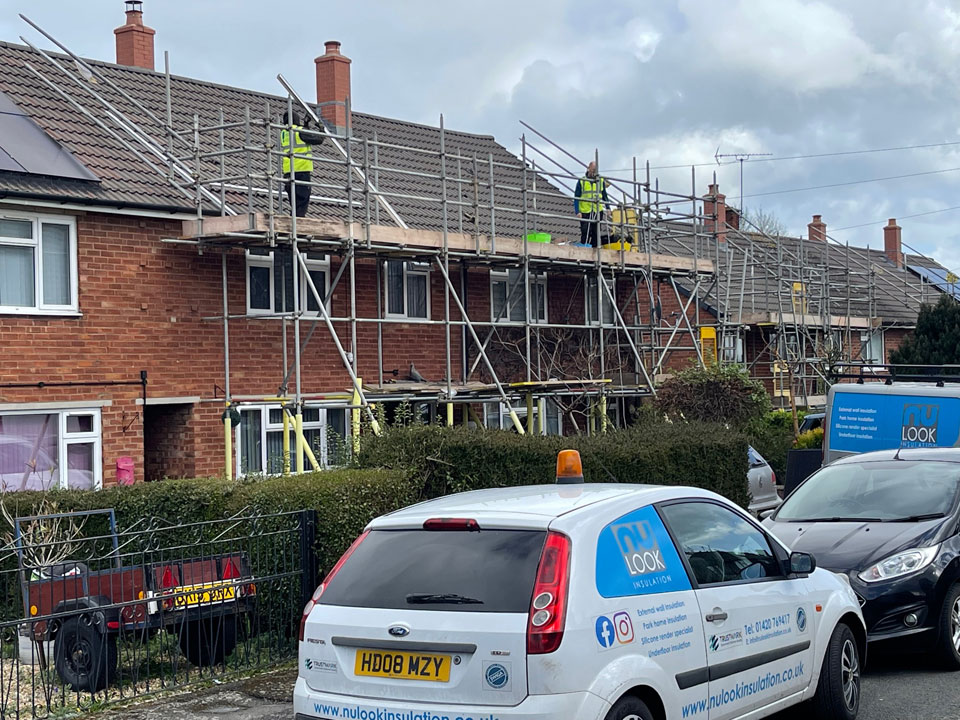
We can work supply or if the customers chooses to they can supply , we incorporate the scaffold costing into pricing so if the customer decides to erect the scaffold for whatever reason we simply deduct our scaffold rate from our pricing.
What is MPAN number?
An MPAN number (Meter Point Administration Number) is a unique reference number used in the UK to identify your electricity supply point.
What Is an MPAN Number?
- MPAN = Meter Point Administration Number
- Also known as a Supply Number
- It’s specific to your electricity connection, not to you as a person
- Used by electricity suppliers, network operators, and the National Grid
What Does It Look Like?
It’s a 21-digit number, typically shown like this:
- Example: 01 123 456 7890 1234 567
- On your electricity bill, it may appear under “Supply Number” and be shown in a box like this: S 01 123 456 7890 1234 567
Only the last 13 digits are the unique identifier — the first few digits describe the type of meter and network info.
Where Do I Find It?
- On your electricity bill
- From your electricity supplier
- By contacting your local Distribution Network Operator (DNO)
What Is It Used For?
| Use | Purpose |
| Identifying your supply | Helps suppliers know exactly which property your electricity is going to |
| Switching providers | Required when changing electricity supplier |
| Billing accuracy | Ensures the right meter is billed |
| Energy data tracking | Used for recording your consumption accurately |
What is a Distribution Network Operator (DNO)?
A DNO stands for Distribution Network Operator — it’s the company responsible for delivering electricity from the national grid to homes and businesses through the local power network.
What Does a DNO Do?
- Maintains local electricity infrastructure – Wires, poles, substations, transformers.
- Delivers electricity to your property – They don’t supply energy, just the connection.
- Fixes power outages – They’re who responds when there’s a local blackout.
- Handles connection requests – New connections, solar installs, battery systems.
- Owns the physical network – Unlike energy suppliers who just sell electricity.
What’s the Difference Between a DNO and a Supplier?
DNO
Owns and maintains the network
Fixes power cuts and infrastructure
You can’t choose your DNO
Energy Supplier
Sells you electricity
Sends you your energy bill
You can switch suppliers anytime
Who Is My DNO?
The UK is divided into 14 DNO regions, served by 6 main DNO companies. Some examples:
| Region | DNO |
| London | UK Power Networks |
| North West England | Electricity North West |
| Scotland | SP Energy Networks or SSEN |
| Midlands | Western Power Distribution (now part of National Grid) |
| South West | National Grid (WPD) |
| Wales | SP Energy Networks |
You can find your DNO by checking your electricity bill or visiting the site:
www.powercut105.com
When Would I Contact My DNO?
- Power cut or outage
- New connection (home or solar system)
- Upgrading supply (e.g. for EV chargers or heat pumps)
- Relocating your electricity meter
- Grid export approval (if installing solar + battery)
What are G98 and G99 applications?
G98 and G99 applications are part of the UK regulations for connecting electricity-generating systems (like solar panels, batteries, or generators) to the grid.
These rules are set by ENA (Energy Networks Association) and are enforced by your local DNO (Distribution Network Operator).
What Are G98 and G99?
| Regulation | Applies To | Use Case |
| G98 (formerly G83) | Small-scale generation (≤3.68 kW per phase) | Typical home solar installs (up to 3.68 kW for single-phase homes) |
| G99 | Larger generation (>3.68 kW per phase) | Bigger home systems, batteries, or commercial solar |
G98 – Small-Scale Installations
When to Use:
- You’re installing a solar PV system up to 3.68 kW (single-phase) or 11.04 kW (three-phase)
- Equipment is pre-approved by the DNO (type tested)
Process:
- You can install without prior approval
- Your installer must notify the DNO within 28 days after installation
- Often called a “G98 Notification“
Typical for domestic solar with 1 inverter on a single-phase home.
G99 – Larger or More Complex Installations
When to Use:
- Your system is over 3.68 kW (single-phase)
- You’re installing battery storage that can export to the grid
- You’re using non-type-tested equipment
- You’re installing on commercial or three-phase premises
Process:
- You must apply for permission before installation
- The DNO will assess:
- Local network capacity
- Safety impacts
- Whether any upgrades are needed
Approval can take a few weeks to a few months, depending on the system and location.
What does “Off Grid” mean?
“Off-grid” in the context of a solar install means that your property is not connected to the national electricity grid at all — you generate, store, and manage 100% of your electricity independently.
What Is an Off-Grid Solar System?
An off-grid system includes:
- Solar panels – Generate electricity from sunlight.
- Battery storage – Store energy for use at night or during cloudy weather.
- Inverter – Converts solar DC power to usable AC for appliances.
- Charge controller – Regulates power flow to protect batteries.
- Backup generator (optional) – Extra backup for long cloudy periods.
How It Works
- During the day, your solar panels power your home and charge the batteries.
- At night or on cloudy days, your home draws energy from the batteries.
- If batteries are drained and there’s no sun, a backup generator (diesel, LPG, etc.) can be used.
Advantages of Going Off-Grid
| Benefit | Why It Matters |
| Total independence | You’re not reliant on the energy grid or rising prices |
| Works in remote locations | Ideal for rural or hard-to-reach areas |
| No risk of grid outages | Power stays on even if the grid goes down |
| No standing charges or energy bills | You generate all your own power |
Challenges of Off-Grid Systems
| Challenge | Details |
| Higher upfront cost | Batteries and backup generators add significant cost |
| Battery management required | You must size storage correctly or risk running out of power |
| Weather-dependent | Prolonged cloudy/rainy days can lead to energy shortages |
| Complex design | System must be sized to meet worst-case scenarios (e.g. winter demand) |
Example: Sizing an Off-Grid System
Let’s say you use 20 kWh/day.
You might need:
- Solar capacity: 5–8 kW of panels
- Battery capacity: 30–60 kWh (to cover 1–2 days of no sun)
- Backup generator: Optional, but recommended for resilience
Costs (Ballpark for UK)
| Component | Estimated Cost |
| 6 kW solar array | £7,000 – £10,000 |
| 40 kWh battery system | £20,000 – £30,000 |
| Inverter + controller | £3,000 – £5,000 |
| Backup generator | £1,000 – £4,000 |
| Total | £30,000 – £50,000+ depending on needs |
Summary
An off-grid solar system is a fully self-reliant setup that powers your home without any connection to the grid — but it needs careful design, sufficient battery storage, and often a backup power source.
Solar Power Your Home
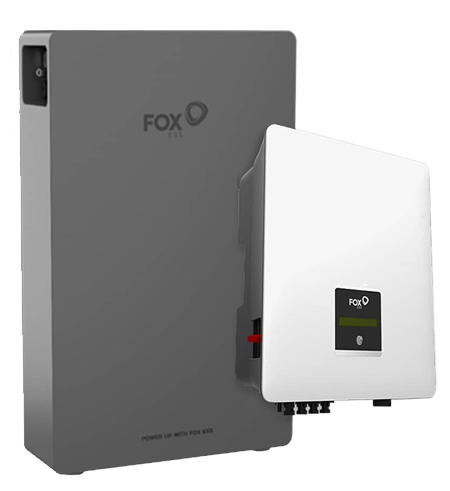
£6,100
- 1x Fox 4KWh Hybrid Inverter
- 1x Fox Ess 5.18KWh Battery
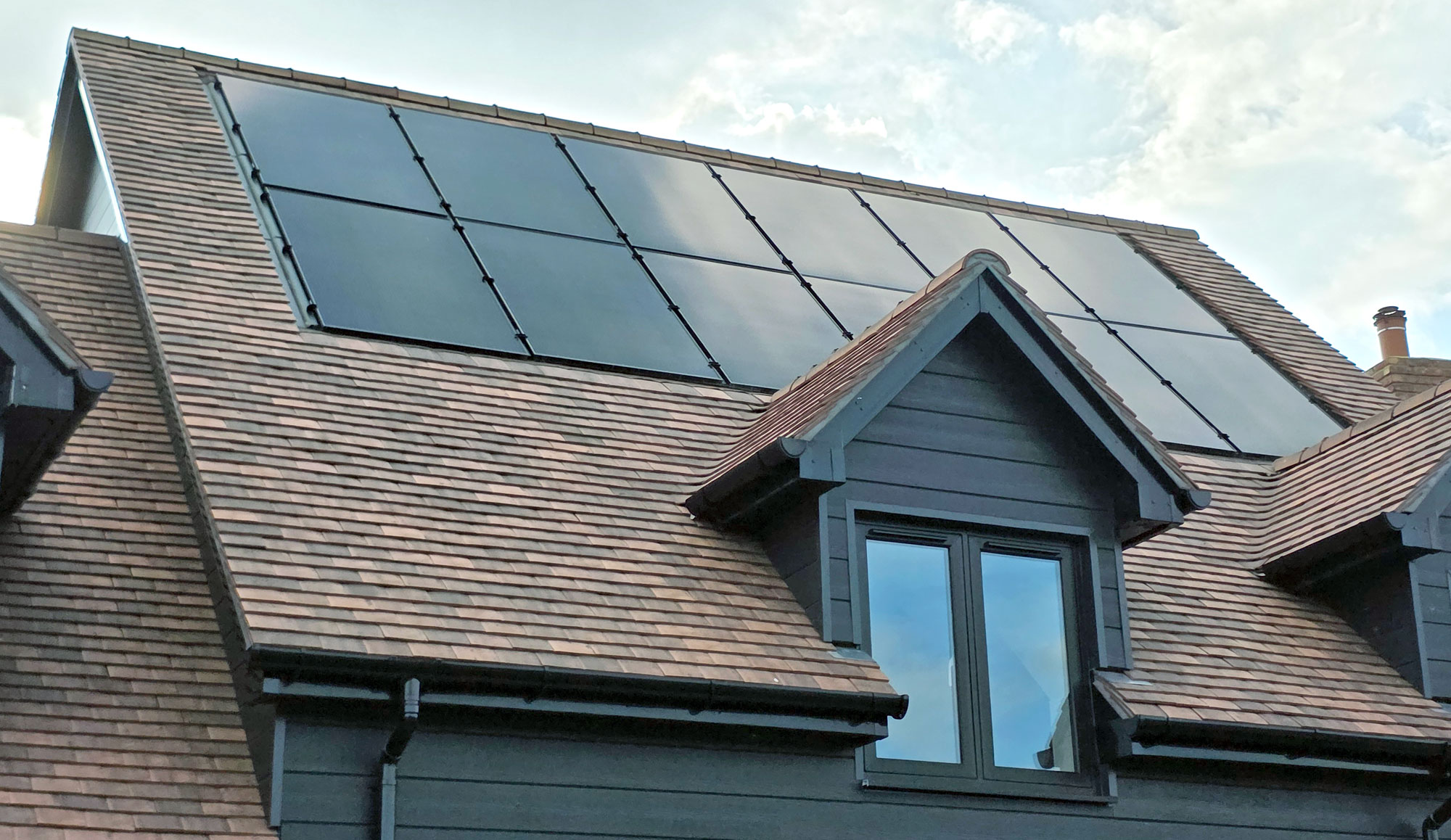
- 8x All Black Panels
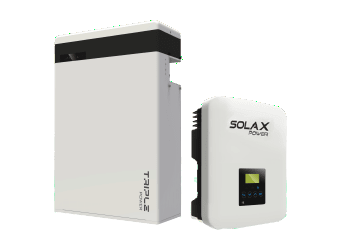

£6,450
- 1x Solax 4KWh Hybrid inverter
- 1x Solax 5.18 KWh Battery
- 8x All black panels
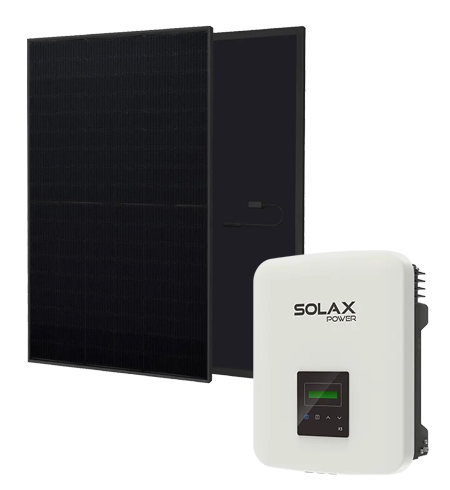
£4995
- 1x Solax 3.6 string inverter
- 8x All Black Panels